A paid advertising platform can record a conversion even when the business never speaks with the customer.
The inquiry may reach voicemail, remain unassigned, receive a late response or disappear from reporting before an appointment is booked.
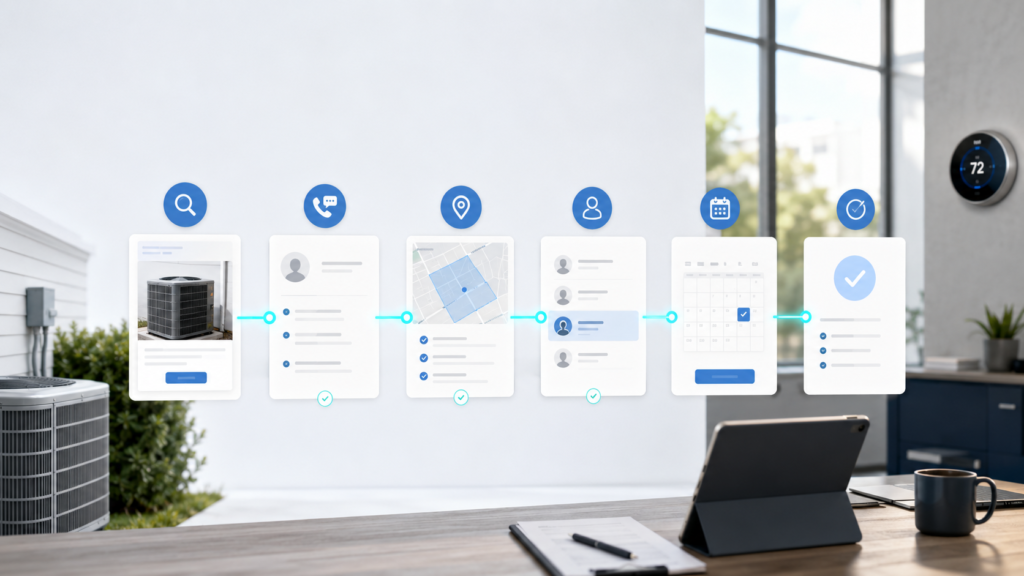
This controlled Autonexis AI demonstration shows how a paid HVAC inquiry can move through one connected GoHighLevel workflow, from the original advertisement to a qualified conversation, responsible human owner, appointment and recorded CRM outcome.
Demonstration disclosure: This case study uses test contacts and sample business data. It demonstrates workflow functionality under controlled conditions. It is not a client-performance claim, testimonial or guarantee of financial results.
The Business Scenario
The demonstration is designed around an established local HVAC company generating inquiries from search advertising, landing-page forms and incoming phone calls.
The hypothetical company has:
- A defined service area
- Multiple HVAC service categories
- A team responsible for responding to inquiries
- A calendar for service appointments or estimates
- A GoHighLevel CRM account
- Existing or planned paid advertising
- A requirement to distinguish useful leads from spam, duplicates and outside-area inquiries
The company does not only need more form submissions. It needs a reliable process for turning eligible inquiries into qualified conversations and booked appointments.
The Operational Problem
Most advertising reports stop at the initial conversion.
A form submission may be counted as a lead even when the person is outside the service area. A phone call may be counted even if nobody answers it. A booked appointment may never be connected to the original campaign.
This creates four common problems.
Slow Response
A customer requesting urgent HVAC service may contact several providers.
If the first call reaches voicemail or a form sits inside an inbox, the customer may book with another company before the team responds.
Unclear Lead Ownership
A lead may enter the CRM without being assigned to a responsible person.
Everyone can see the inquiry, but nobody is clearly accountable for contacting, qualifying or updating it.
Incomplete Qualification
A form submission alone does not confirm that the opportunity is commercially relevant.
The business still needs to understand the requested service, location, urgency, property type and preferred appointment timing.
Missing Outcomes
The advertising platform may report a conversion, but the business may not record whether the lead became an appointment, estimate, completed job, outside-area inquiry, duplicate or lost opportunity.
Without that information, campaign decisions remain based on incomplete evidence.
The Demonstration Objective
The goal was to build a controlled paid lead generation workflow that gives every test inquiry:
- A preserved lead source
- An appropriate acknowledgement
- A qualification path
- A responsible owner
- A clear booking opportunity
- A defined follow-up process
- A recorded CRM outcome
The demonstration was not designed to manufacture advertising results.
It was designed to verify that the operating system after the click functions as intended.
The GoHighLevel Workflow
1. Capture the Original Lead Source
The test contact enters GoHighLevel through a tracked landing-page form, incoming call or missed-call event.
The contact record preserves the available campaign source, inquiry type and submitted information.
This allows the business to review which campaign or conversion path produced the inquiry.
Recommended evidence: Insert a redacted screenshot of the test contact record showing the source, form or call event and submission timestamp.
2. Send an Immediate Acknowledgement
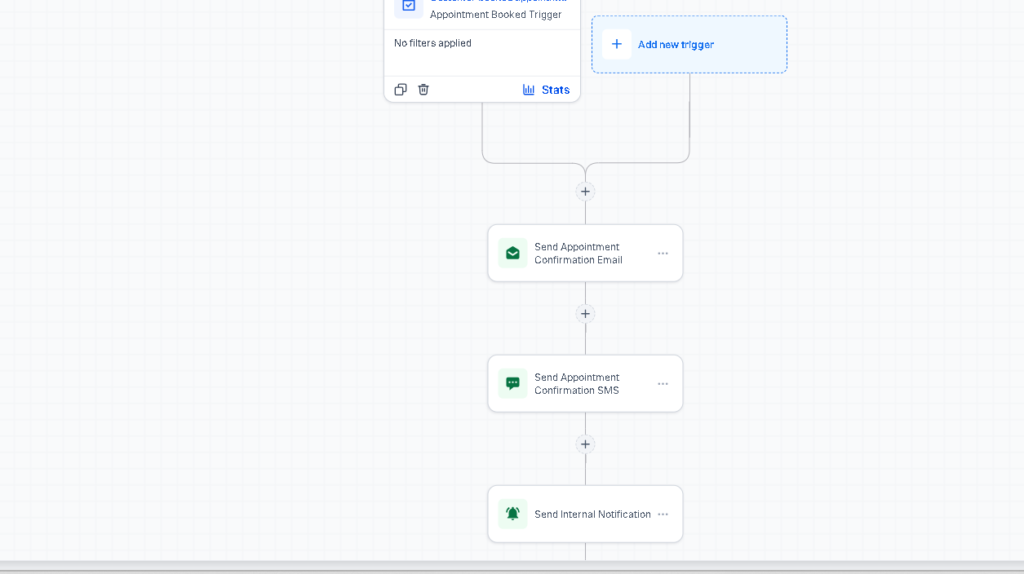
After an eligible inquiry enters the CRM, an approved acknowledgement is triggered.
The message confirms that the request was received and explains the expected next step.
This acknowledgement is not presented as a replacement for human contact. Its purpose is to prevent the customer from receiving no response while the inquiry is being assigned.
For missed calls, the workflow can send an approved missed-call response and create a task for the responsible team.
Recommended evidence: Insert a screenshot of the workflow execution history and test acknowledgement message.
3. Record Basic Qualification
The workflow records the information required to determine whether the lead fits the service model.
For the HVAC demonstration, the qualification fields include:
- Requested service
- ZIP code or service area
- Urgency
- Property type
- Preferred appointment time
- Existing customer status
- Contact preference
An outside-area inquiry can follow a different path from an eligible service request.
A duplicate, spam submission or incomplete contact can also be categorized without being treated as a qualified lead.
4. Assign a Responsible Human Owner
Eligible leads are assigned to the correct person or team.
The assigned owner receives an internal notification containing the available source, service request, location and contact information.
This creates visible responsibility inside the CRM.
A lead should not remain in a shared pipeline without somebody being accountable for the next action.
Recommended evidence: Insert a screenshot showing the assigned user, opportunity owner and internal notification.
5. Create the Appointment Path
Qualified leads receive the appropriate booking opportunity.
The booking path can include a service calendar, estimate calendar or direct human scheduling process depending on the business.
When a test appointment is booked, the event is connected to the contact and opportunity record.
Appointment status can then distinguish:
- Appointment requested
- Appointment confirmed
- Appointment completed
- Appointment rescheduled
- Customer cancelled
- Customer did not attend
This gives the company more useful information than a simple form-submission count.
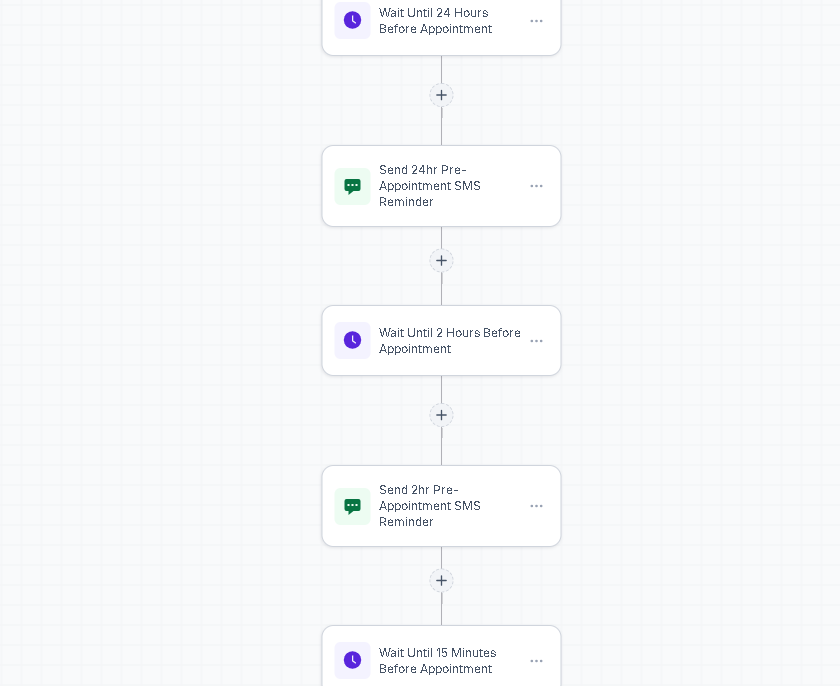
6. Continue Approved Follow-Up
Not every eligible lead books immediately.
If a test lead does not schedule or respond, the workflow can continue an approved follow-up sequence.
The sequence may include:
- A booking reminder
- A request for missing qualification details
- A human follow-up task
- A final status request
- A controlled stop condition
The workflow must stop or change when the customer replies, books, opts out or requires human assistance.
This prevents the contact from receiving irrelevant messages after the situation changes.
7. Record the Lead Outcome
Each test inquiry is moved into a defined CRM outcome.
The demonstration uses categories such as:
- Valid inquiry
- Qualified lead
- Outside service area
- Duplicate
- Spam
- Unreachable
- Appointment booked
- Appointment completed
- Estimate provided
- Won
- Lost
The exact stages should match the company’s actual sales and service process.
The purpose is to create consistent definitions that both marketing and operations can understand.
8. Return Better Evidence to Advertising Decisions
The initial advertising conversion remains useful, but it is no longer the only signal available.
The business can compare campaign sources with:
- Valid inquiries
- Qualified conversations
- Response activity
- Booked appointments
- Completed appointments
- Available commercial outcomes
Where platforms and account permissions support it, selected offline outcomes can also be returned to campaign reporting.
This provides a stronger basis for advertising decisions than lead volume alone.
Test Scenarios Used
The workflow should be tested with several controlled situations before real advertising traffic is connected.
Eligible Form Submission
A test contact submits an HVAC service request from inside the service area.
The system should preserve the source, acknowledge the request, create the opportunity, assign an owner and provide the correct appointment path.
Missed Phone Call
A test caller reaches the tracked number without speaking to a team member.
The system should record the event, send the approved missed-call response and create the appropriate human follow-up task.
Outside-Area Inquiry
A test lead submits a ZIP code outside the company’s approved territory.
The lead should be categorized correctly without being reported internally as a qualified opportunity.
Unresponsive Lead
A valid test contact does not reply or book.
The approved follow-up sequence should continue until the defined stop condition is reached.
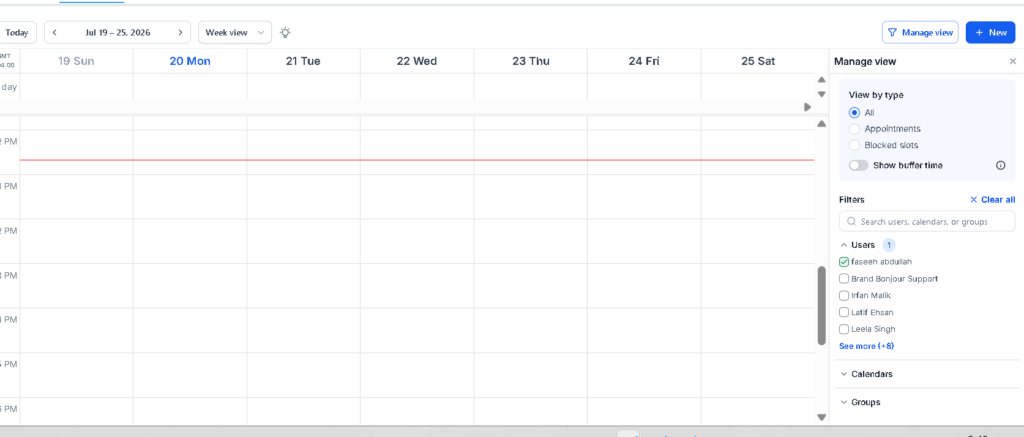
Appointment Booking
A qualified test contact selects an available appointment.
The appointment should appear on the correct calendar and update the related contact and opportunity records.
What the Demonstration Validates
The controlled test can verify that:
- Lead-source information reaches the CRM
- The correct workflow starts
- Eligible contacts receive the intended acknowledgement
- Qualification details are recorded
- A responsible owner is assigned
- Internal notifications reach the correct team
- Appointment information reaches the correct calendar
- Pipeline stages update as the test lead progresses
- Follow-up stops or changes after a reply or booking
- Final outcomes remain available for reporting
These are system-functionality checks.
They demonstrate that the designed workflow can execute under controlled conditions.
What This Demonstration Does Not Prove
This demonstration does not prove or guarantee:
- Future lead volume
- Advertising cost
- Cost per lead
- Lead quality
- Appointment volume
- Completed jobs
- Customer revenue
- Return on advertising spend
- Sales-team performance
Commercial performance is affected by demand, competition, service area, offer quality, pricing, available capacity, response quality and the company’s ability to close and fulfill the work.
Autonexis AI does not present controlled test data as client-performance data.
Why This Matters for Local-Service Businesses
Local-service companies often focus heavily on generating the initial inquiry.
The larger commercial problem may exist after the inquiry arrives.
A connected marketing automation and CRM system helps the business see whether paid opportunities are being acknowledged, qualified, assigned, scheduled and recorded consistently.
This is especially relevant for companies receiving time-sensitive inquiries through calls and short website forms.
The same operating principles can be adapted for HVAC, plumbing, electrical, roofing and other local-service businesses.
Start With a Revenue Recovery Audit
The Revenue Recovery Audit examines what happens between the advertising conversion and the recorded commercial outcome.
The review can include:
- Campaign and offer alignment
- Landing-page paths
- Call and form tracking
- Response timing
- Lead qualification
- CRM ownership
- Follow-up logic
- Appointment recording
- Pipeline definitions
- Available outcome data
The objective is to identify where paid opportunities lose quality, speed, ownership or visibility before more advertising budget is committed.